

Last Updated on September 5, 2026 by Mandy Tyler, M.Ed., RD, CSSD, LD
Key Nutrition Tips for Girls Flag Football
Girls flag football is taking America by storm. With the sport making its debut at the 2028 Olympic Games, girls flag football is rising in popularity across the world.
Girls flag football is now offered as a collegiate sport at over 100 universities across the nation. At the high school level, over 40 states are offering girls the opportunity to participate in flag football (1, 2).
With the rise in popularity, providing girls flag football players with nutrition tips to support their health and performance is important.
Let’s take a look at how flag football differs from traditional tackle football. Then we will explore key sports nutrition tips to help girls flag football players fuel for optimal performance.
Flag Football vs. Tackle Football
The game of flag football is very similar to tackle football with the main exception of it being a non-contact sport – thus, no tackling (3).
In flag football, players wear flags attached to their waists, which the opposing team attempts to remove. Pulling a flag from an opponent’s waste is the flag football version of tackling (3).
Flag football is played with less players, typically 5 or 7 players, compared to 11 players in tackle football (3). It is a faster paced sport with players needing speed, agility, and endurance to excel on the field. This differs from tackle football where absolute strength and power are a necessity (4).

Key Nutrition Tips for Girls Flag Football
Girls Flag Football: Fuel Your Performance
It is important for flag football players to go into their workouts and carbohydrates optimally fueled.
A well-planned pre-game meal can help ensure flag football players start the game with the energy needed to perform at their best.
When possible, I encourage girls flag football players to schedule their pre-game meal 3-4 hours prior to the start of the competition. This allows time for the athletes to digest and go to the bathroom, if needed, prior to the start of the game.
Fuel with Carbohydrates for Energy
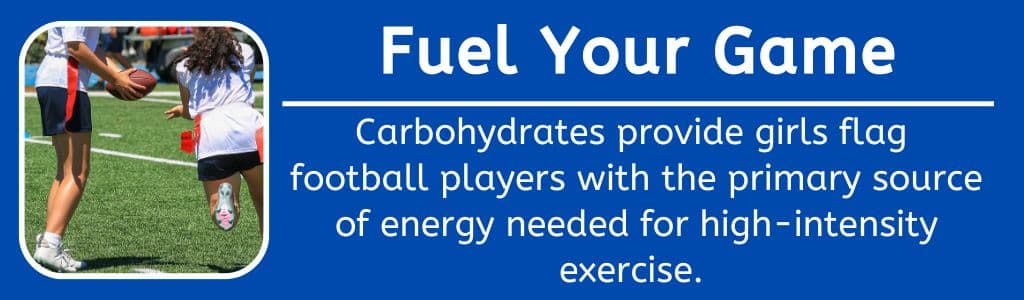
Carbohydrates provide athletes with the primary source of energy for high-intensity exercise. Thus, carbohydrates should be at the foundation of a girl flag football player’s pre-game meal.
I like to encourage athletes to fill half of their pre-game plate with carbohydrate-rich food items. In addition to carbohydrates, athletes can add a moderate amount of protein and colorful fruits and veggies.
Some of my favorite pre-game meals for flag football players include:
- Pancakes, scrambled eggs, fresh sliced fruit
- Fruit smoothie, bagel with nut butter and honey
- Grilled chicken wrap, fresh fruit cup, yogurt parfait
- Turkey sub sandwich, pretzels, apple slices
- Pasta with marinara, sliced chicken, vegetables, breadsticks
- Grilled salmon, steamed rice, green beans, dinner rolls
Pre-Game Snack Ideas for Girls Flag Football
In the 1-2 hours leading up to a flag football game, athletes should continue to fuel with high-carb snacks. Eating easy to digest, carbohydrate-rich snacks will provide flag football players with a quick source of energy as they head into the game.
Easy pre-game snack ideas for flag football players include:
- Applesauce squeeze pouch
- Banana, small piece of fresh fruit
- Fruit leather, dried fruit, fruit snacks
- Pretzels, snack crackers
- Carbohydrate-based sports bar, granola bar, cereal bar
- Sports drinks, chews, or gel
Girls Flag Football Halftime Nutrition
I encourage flag football players to take advantage of the halftime break to refuel and rehydrate.
Refueling with a high-carb snack can help ensure flag football players have the energy needed through the final whistle.
Halftime snacks such as an applesauce squeeze pouch, banana, fruit snacks, pretzels, sports chews, or sports gels can all provide athletes with an extra source of energy for the second-half of the game.
Pro Tip: I commonly tell athletes to think “gulps” and “bites” when it comes to halftime snacks. Taking several big gulps of fluid and bites of a bar or piece of fruit can provide flag football players with additional energy for the second half.
Girls Flag Football: Recover After Workouts
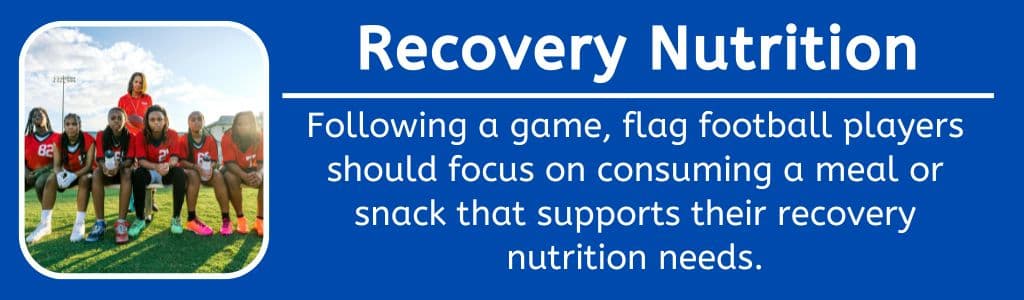
Following a workout or competition, flag football players should focus on consuming a meal or snack that supports their recovery nutrition needs.
Recovery nutrition is particularly important when athletes have limited time (<24 hours) before the next training session or competition.
Recovery Nutrition Needs of Girls Flag Football Players
The three key areas of recovery nutrition for girls flag football players include:
- Rehydrate: Consume fluid and electrolytes to replace sweat losses
- Refuel: Consume carbohydrates to refill energy stores
- Build and Repair: Consume protein to build and repair muscles
Recovery Nutrition Snack Ideas for Girls Flag Football
Snacks flag football players can enjoy after a workout or following a game include:
- Chocolate milk with granola bars
- Peanut butter and jelly sandwich with milk
- Greek yogurt, mixed berries, and protein granola
- Hummus, pita chips, soy milk
- Turkey and cheese wrap with tart cherry juice
- Beef jerky, pretzels, banana, 100% fruit juice
- Greek yogurt drink, bagel with nut butter
- High-protein milk with breakfast bars
- Post-workout smoothie
Flag football players can further support their recovery nutrition needs by following-up their snack with a well-balanced post-game meal in the next couple of hours.
Pro Tip: Make sure to check out my blog on top recovery foods for athletes for additional post-workout ideas.
Girls Flag Football: Prioritize Hydration
Hydration is important for girls flag football players. Dehydration can negatively impact both health and sports performance. In addition, dehydration increases the risk of heat illness, especially when exercising in a hot and humid environment (5).
Therefore, starting practice or competition in an optimally hydrated state and rehydrating during and after activity is important for flag football players.
Hydration Needs of Flag Football Players
When discussing the hydration needs of athletes, it is important to note that each athlete is unique in regard to the amount of fluid and electrolytes lost in sweat.
When possible, it is best for athletes to work with a sports dietitian nutritionist to develop an individualized hydration plan to support their performance needs.
Hydrate Before Flag Football Practices and Games
Although hydration needs vary amongst athletes, there are some general hydration strategies that flag football players can follow.
Approximately 4 hours prior to the event, it is recommended that athletes drink 5-7 mL of fluid per kg of body weight (6).
For a 150-pound athlete, this calculates to be ~12 – 16 fluid ounces. Based on this I commonly recommend flag football players consume ~2 cups of fluid (16 fl oz) with their pre-game meal.
In the hour leading up to the game, flag football player players should continue hydrating, aiming to drink another 6-8 oz of fluid.
Hydrate During Flag Football Practices and Games
During a flag football game, athletes should focus on rehydrating with fluids and electrolytes, as well as refueling with carbohydrates.
Athletes engaged in intermittent sports that involve frequent bouts of high-intensity exercise, such as flag football, should aim to consume 30-60 grams of carbohydrates per hour (5, 7).
Consuming a sports drink during a game can help flag football players with replacing fluids and electrolytes, as well as providing a source of carbohydrates for energy (8).
If athletes hydrate with water, they should make sure to replace carbohydrates and electrolytes from another source during the game.
Pro Tip: Make sure to check out my blog, Hydration Tips for Athletes, for guidance on calculating an athlete’s sweat rate and strategies for hydrating during activity.
Hydrate After Flag Football Practices and Games
Following a flag football game, athletes should make sure to rehydrate to replace sweat losses. Weighing before and after activity can help flag football players determine much fluid was lost in sweat.
For each pound of weight lost, athletes should aim to drink 20-24 oz of fluid before the next exercise session, in order to fully rehydrate (5).
Including sodium, in either food or beverages following activity, can help athletes with replacing the sodium lost in sweat (6). This is particularly important if flag football players have limited time to rehydrate before their next practice or competition.
Girls Flag Football: Injury Prevention
Although flag football players are considered at a lower risk for injury than athletes playing tackle football, injuries still occur (9).
Common injuries amongst girls flag football players include strains, sprains, and fractures. Concussions are also a risk for flag football players, however, to a lesser extent than the risk associated with tackle football (9).
A sports nutrition meal plan can provide flag football players with a strong nutrition foundation that helps reduce their risk of injury.
Consume Adequate Calories to Support Health and Performance
Girl flag football players commonly expend a high number of calories each day through practices and competitions, strength training and conditioning, as well as normal daily activities.
When daily caloric expenditure from these activities exceeds intake of calories from foods and beverages an imbalance occurs. We refer to this imbalance of calories as Relative Energy Deficiency in Sport or REDs (10).
Relative Energy Deficiency in Sports
REDs is associated with a syndrome of health concerns that can have negative impacts throughout the body. In addition, the caloric imbalance can negatively impact sports performance (10).
Health and performance concerns associated with REDs include (10, 11):
- Nutrient deficiencies
- Disruption of the menstrual cycle
- Overuse injuries, stress fractures
- Frequent illnesses
- Decreased strength and endurance
- Difficulty concentrating
- Reduced response to training
- Sleep disturbances
For these reasons, it is a top priority for girl flag football players to avoid underfueling and to consume adequate daily calories through their meals and snacks.
Nutrition to Support Bone Health
Female athletes are at a greater risk of stress fractures than male athletes (12). Thus, in addition to total calories, it is important that girl flag football players ensure they consume nutrients that support optimal bone health.
Key nutrients that support the building of strong bones include:
- Protein
- Calcium
- Vitamin D
- Vitamin K2
- Magnesium
Dairy Foods for Bone Health
Dairy foods, such as milk and yogurt, provide protein, calcium, and Vitamin D, making them a nutritious addition to a female athlete’s meal plan.
Based on this, I encourage girl flag football players to aim to include at least 3 servings of dairy in their meals and snacks throughout the day.
Support Recovery with Anti-Inflammatory Foods
Finally, I encourage girl flag football players to include a variety of foods in their meals and snacks that can help reduce inflammation in the body and support recovery from exercise.
Some of my top anti-inflammatory food choices include:
- Berries, cherries, tart cherry juice, pomegranate juice
- Fatty fish: Salmon, tuna, mackerel, herring, and sardines
- Dark green leafy vegetables, broccoli, bell peppers, tomatoes
- Nuts and seeds: Walnuts, pistachios, almonds, flaxseeds, chia seeds
- Herbs and spices: Turmeric, ginger, garlic, rosemary
Pro Tip: For additional information on nutrition for injuries, make sure to check out my blogs: nutrition for injury prevention and recovery, best food for concussions, and nutrition for stress fractures.
Key Nutrition Tips for Girls Flag Football
You are now set with key nutrition tips for girls flag football players. It will be exciting to see flag football continue to grow in popularity and provide more opportunities for girls to compete at high levels.
For additional sports nutrition tips make sure to check out my blog: What to Eat the Night Before a Game.
Join the Nutrition By Mandy Email List & Get a Free Game Day Fueling Tip Sheet
Click HERE to join the Nutrition By Mandy e-mail list. When you join you will receive a free game day fueling tip sheet for athletes.
About the Author
Mandy Tyler is a Sports Dietitian Nutritionist in the San Antonio, TX area. She is a Registered and Licensed Dietitian, a Board-Certified Specialist in Sports Dietetics, a Licensed Athletic Trainer, and is a Certified Exercise Physiologist through the American College of Sports Medicine. Mandy has experience working with athletes at the high school, collegiate, and professional levels. She believes the key to reaching one’s full potential, both in everyday life and in sports performance, relies on a healthy nutritional foundation.

If you are looking to take your performance to the next level, make sure to check out my Sports Nutrition Game Day Guide. This downloadable guide is written to help athletes develop an individualized plan to achieve peak performance on game day.