Last Updated on April 18, 2026 by Mandy Tyler, M.Ed., RD, CSSD, LD
Anti-Inflammatory Foods for Athletes
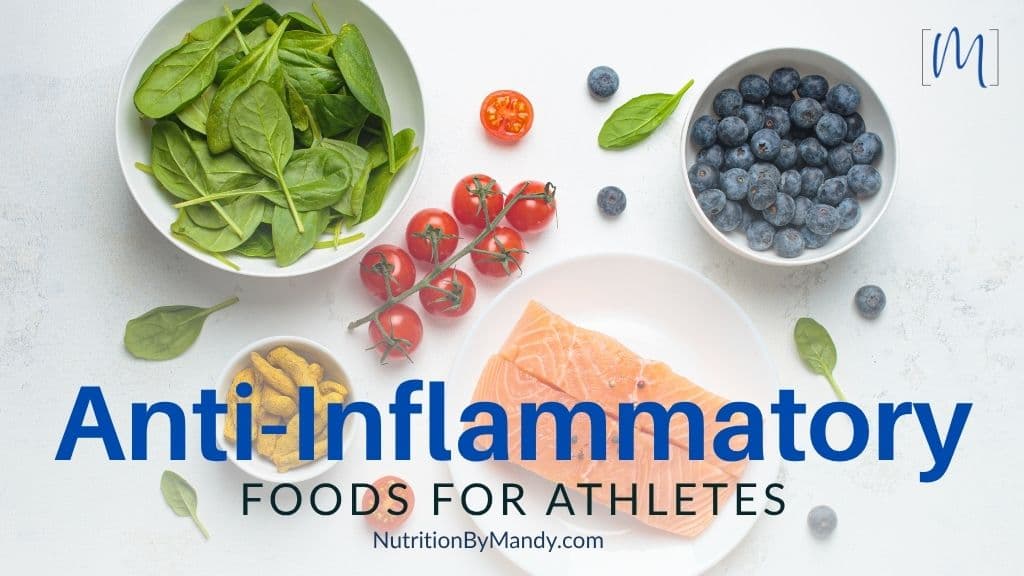
It’s common for athletes to ask what anti-inflammatory foods they should include in their meal plans to support their health and performance.
While there is not one “best” food to consume, a balanced sports nutrition diet, that includes a variety of anti-inflammatory foods, can help reduce inflammation and support athletes with recovering from exercise.
Let’s take a look at some of my top anti-inflammatory food choices for athletes to add to their meals and snacks.
Berries: Anti-Inflammatory Fruit for Athletes
Berries are a nutritious anti-inflammatory fruit choice for athletes. The phytochemicals in fruit, such as berries, are known to be a natural way to reduce inflammation in the body (1).
Berries are recognized as being amongst the top food sources of phytochemicals. In addition to phytochemicals, berries also contain Vitamin C, a potent antioxidant that helps scavenge free radicals in the body (2).
Berries have a high-water content. Therefore, including berries in the diet can help support athletes with meeting their daily hydration needs. Adequate hydration is important to help remove toxins from the body and support immune health.
Berries to Include in an Athlete’s Meal Plan
Different types of berries contain different types of polyphenol compounds. Thus, I encourage athletes to include a variety of berries in their meal plans, including:
- Blueberries, blackberries, raspberries
- Strawberries, cranberries
- Acai berries, goji berries
Adding Berries to an Anti-Inflammatory Diet for Athletes
There are numerous ways athletes can add berries to their meals and snacks, including:
- Include blueberries as an ingredient in overnight oats or pancakes
- Add mixed berries to a Greek yogurt parfait for breakfast on-the-go
- Top your breakfast cereal or salad with sliced strawberries
- Enjoy an acai bowl as an after-school snack
- Include mixed berries in an anti-inflammatory post-workout smoothie
Pro Tip: Keep a variety of berries on hand in the freezer, which can make a quick addition to smoothies, overnight oats, and parfaits.

Tart Cherries
Tart cherries are another nutrient-rich, anti-inflammatory fruit choice for athletes. They are packed full of antioxidants and phytochemicals, which have anti-inflammatory effects in the body (3).
Research has shown that supplementing with tart cherries can support athletes with recovering from strenuous exercise (4). For example, consuming tart cherry juice has been found to help reduce muscle soreness and decrease inflammation following activity (3).
In addition to anti-inflammatory benefits, tart cherries also provide a natural, dietary source of melatonin (5). Thus, consuming tart cherry juice has been researched as a natural way to support sleep quality and duration in athletes (6).
Pro Tip: During the competitive season, when athletes are looking to optimize recovery, supplementing with tart cherries may be advantageous. Athletes may consider drinking tart cherry juice following a competition or adding it to a fruit smoothie to help support their recovery nutrition needs.
Avocados
Avocados are a nutrient-dense, anti-inflammatory food for athletes to add to their diets. They are packed full of antioxidants and phytochemicals that have numerous health benefits, including reducing inflammation (7).
Avocados are one of the few foods that contain significant levels of both of the antioxidants Vitamins C and E (7). It is recommended that athletes select foods rich in these antioxidants to meet their daily needs.
Research suggests that chronic high-dose supplementation of Vitamins C and E may actually blunt desired training adaptations (8). Thus, a food-first approach to obtaining antioxidants in the diet is recommended.
Due to their nutrient profile and abundance of anti-inflammatory and antioxidant compounds, avocados are promoted as being one of the most nutritious fruit options (9).
Tips for Adding Avocado to an Athlete’s Anti-Inflammatory Meal Plan
Easy ideas for adding avocado to an athlete’s meal plan include:
- Prepare avocado toast to enjoy as part of a nutritious breakfast
- Add avocado to a turkey and spinach wrap for a healthy lunch on-the-go
- Enjoy a burrito bowl or quesadilla topped with avocado for an easy weeknight dinner
- Make guacamole to eat with pita chips and mini peppers for a healthy afternoon snack
- Blend avocados into a high-calorie smoothie to support weight gain goals
Pomegranates
Pomegranates are a nutrient-dense fruit that contain dietary fiber, vitamins, and minerals. In addition, pomegranates are packed full of polyphenols that exert anti-inflammatory effects in the body (8).
Due to the polyphenol content, pomegranate juice has been researched as a way to help athletes reduce post-exercise muscle soreness and support recovery from exercise (8).
Ideas for adding pomegranates to an athlete’s meals and snacks include:
- Enjoy a glass of pomegranate juice as part of a post-workout recovery snack
- Blend pomegranate juice into a fruit smoothie
- Enjoy cottage cheese topped with pomegranate seeds as a healthy snack
- Sprinkle pomegranate seeds on top of a salad for a nutrient-rich topping
Leafy Greens: Anti-Inflammatory Veggie Choice for Athletes
Leafy greens are a nutritious anti-inflammatory veggie choice for athletes.
They provide an array of vitamins and minerals. In addition, they contain a variety of antioxidants and phytochemicals, which have anti-inflammatory effects in the body (10).
Similar to berries, I encourage athletes to include a variety of leafy greens in their meal plans, including:
- Spinach, kale, arugula
- Romaine lettuce, cabbage, bok choy
- Swiss chard, watercress
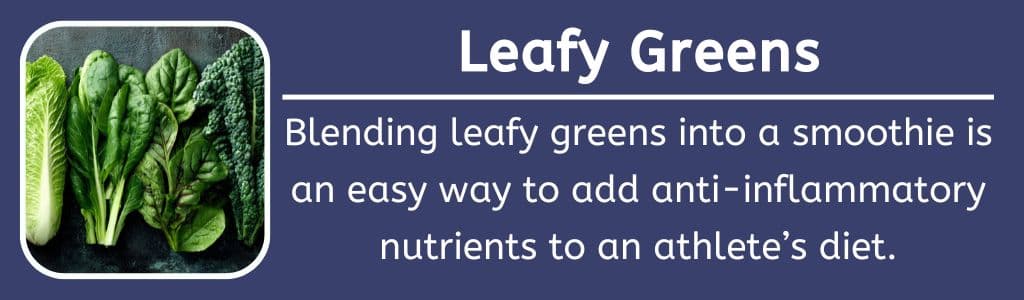
Pro Tip: Blending leafy greens into a smoothie can be an easy way to add anti-inflammatory nutrients to an athlete’s diet. I find adding leafy greens to a smoothie is an easy way to boost an athlete’s veggie intake.
Salmon: Anti-Inflammatory Omega-3s for Athletes
Salmon is a nutritious way for athletes to add both protein and anti-inflammatory omega-3 fatty acids to their meal plan. A 6-oz serving of wild salmon provides ~3 grams of omega-3 fatty acids (EPA and DHA) and 33 grams of protein (11).
Omega-3 fatty acids are considered essential fatty acids because the body cannot produce them. Thus, athletes must consume omega-3 fatty acids in the diet to support their health and nutrition needs.
Research has shown that omega-3 fatty acids can help reduce post-exercise inflammation and support athletes with recovering from exercise (12).
Add Fatty Fish to an Athlete’s Anti-Inflammatory Meal Plan
I encourage athletes to includes several servings of fatty fish, such as salmon, in their sports nutrition meal plan throughout the week. Other fatty fish that contain omega-3 fatty acids that athletes can enjoy include (13):
- Tuna
- Herring
- Sardines
- Mackerel
- Anchovies
- Trout
Extra Virgin Olive Oil
Extra virgin olive oil is an anti-inflammatory oil that I encourage athletes to utilize when preparing meals. It contains a variety of polyphenols, which have antioxidant and anti-inflammatory effects in the body (14).
In addition, olive oil provides healthy, monounsaturated fats that are a nutritious addition to an athlete’s diet. Including monounsaturated fats in the diet (particularly in replacement of saturated fats) is associated with numerous health benefits, including reduced inflammation (15).
I recommend athletes use olive oil as a dressing on salad, as a marinade on chicken and fish, drizzled on top of avocado toast, and to sauté vegetables.
Walnuts: Anti-Inflammatory Nut for Athletes
Walnuts are an excellent anti-inflammatory nut choice for athletes. They are packed full of nutrients, including: protein, healthy unsaturated fats, polyphenols, and prebiotic fibers (16).
Walnuts are the only type of nut that provides an excellent source of the omega-3 fatty acid, alpha-linolenic acid. The combination of nutrients, phytochemicals, and omega-3 fatty acids in walnuts lead to their many health benefits, including a reduction of inflammation in the body (16).
Adding Walnuts to an Athlete’s Anti-Inflammatory Meal Plan
There are numerous ways athletes can add walnuts to their sports nutrition meal plan. Some of my favorite ideas include:
- Add chopped walnuts to oatmeal or breakfast cereal in the morning
- Include chopped walnuts as a topping on a Greek yogurt parfait, chia seed pudding, or cottage cheese with fruit
- Add walnuts to your favorite baked goods, such as banana bread or muffins
- Sprinkle chopped walnuts on top of a salad for added protein
- Build a healthy trail mix with walnuts, dried fruit, and pretzels
- Include chopped walnuts as an ingredient in chicken or tuna salad
Flaxseeds: Anti-Inflammatory Seed Choice for Athletes
Flaxseeds are a great anti-inflammatory seed choice for athletes. They contain vitamins, minerals, polyphenols, soluble and insoluble fiber, as well as omega-3 fatty acids.
Flaxseeds are commonly referred to as a “super food” due to their nutrient content, array of bioactive compounds, and many health-promoting benefits (17).
Adding Flaxseeds to Meals and Snacks
To get the most benefit from flaxseed, it is recommended to consume it in the ground form (17). Ground flaxseed has a slightly nutty flavor, making it an easy addition to an athlete’s meals and snacks.
Ideas for adding ground flaxseeds to an athlete’s diet include:
- Blend into an anti-inflammatory fruit smoothie
- Include ground flaxseed as a topping on a fruit and Greek yogurt parfait
- Add ground flaxseeds as a topping on cereal or ingredient in overnight oats
- Mix into pancake, waffle, or muffin mixes before baking
- Sprinkle on top of cooked vegetables or salad
Turmeric: Anti-Inflammatory Spice for Athletes
When discussing anti-inflammatory foods for athletes, it is worth mentioning the spice turmeric. Turmeric has long been used in traditional eastern medicines for its pain relieving and healing properties (18).
It is commonly referred to as the “golden spice” due to its bright yellow-orange color (18). If you have never heard of turmeric, you possibly have tasted the spice, as it is a common ingredient in curries.
Curcumin, the main polyphenol found in turmeric, has been researched for its anti-inflammatory benefits (8). Due to its antioxidant and anti-inflammatory properties, curcumin has been considered in the management of conditions such as osteoarthritis and metabolic syndrome (19).
Research in athletes suggests that curcumin supplementation may help decrease inflammation, reduce muscle soreness and damage, and support recovery from exercise. However, more long-term research is needed to establish dosing recommendations (20).

Adding Turmeric to an Anti-Inflammatory Diet for Athletes
Turmeric is not absorbed well by the body. However, piperine (a compound in black pepper) has been found to increase its bioavailability. Thus, it is common to recommend consuming turmeric with black pepper to help increase its absorption (19).
Ideas for adding turmeric to an athlete’s meal plan include:
- Use turmeric and black pepper to season vegetables, rice dishes, scrambled eggs, and soups
- Include turmeric in a marinade for beef, pork, poultry, or fish
- Add turmeric to an anti-inflammatory smoothie
- Prepare turmeric and ginger wellness shots (recipe from EatingWell)
- Enjoy a Golden Milk Latte made with turmeric and ultra-filtered milk (recipe from Fairlife)
Anti-Inflammatory Foods for Athletes
You now have an overview of a variety of anti-inflammatory foods that I encourage athletes to include in their meals and snacks. As a reminder, a balanced meal plan, containing a variety of anti-inflammatory foods, is optimal for supporting an athlete’s health and performance.
For additional sports nutrition tips and resources, make sure to check out my blog on the Vitamin D needs of athletes.
Join the Nutrition By Mandy Email List & Get a Free Athlete’s Grocery List
Click HERE to join the Nutrition By Mandy e-mail list. When you join you will receive a free athlete’s grocery list to print and take with you to the store.
About the Author
Mandy Tyler is a Sports Dietitian Nutritionist in the San Antonio, TX area. She is a Registered and Licensed Dietitian, a Board-Certified Specialist in Sports Dietetics, a Licensed Athletic Trainer, and is a Certified Exercise Physiologist through the American College of Sports Medicine. Mandy has experience working with athletes at the high school, collegiate, and professional levels. She believes the key to reaching one’s full potential, both in everyday life and in sports performance, relies on a healthy nutritional foundation.
If you are looking to take your performance to the next level, make sure to check out my new Sports Nutrition Game Day Guide. This downloadable guide is written to help athletes develop an individualized plan to achieve peak performance on game day.