
Last Updated on February 1, 2026 by Mandy Tyler, M.Ed., RD, CSSD, LD
Calcium for Teens: Meeting the Needs of Athletes
Wondering if your teen athlete is getting enough calcium in their diet? You are not alone – as a sports dietitian, this is a question I am frequently asked by concerned parents.
Let’s explore the importance of calcium for teens. Then I will share helpful tips for adding calcium-rich foods and beverages to a teen athlete’s sports nutrition meal plan.
Importance of Calcium for Teens
Calcium is a mineral that plays many important roles in the body. It is the primary building block of bones and teeth, providing them with both structure and strength (1).
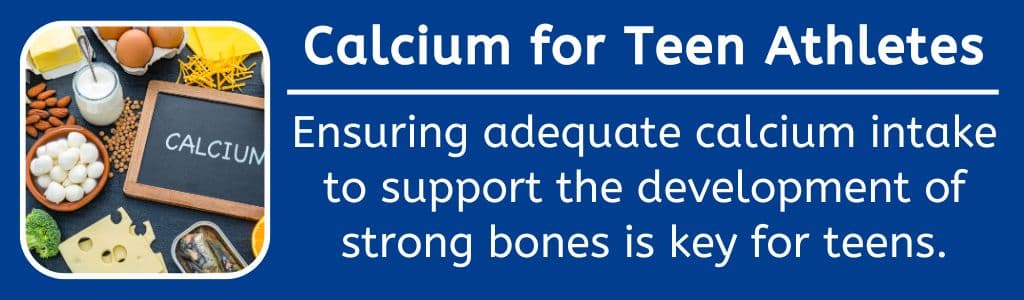
During the teen years, athletes are laying down bone mass. It is estimated that 90% of peak bone mass is developed in females by the age of 19 and by the age of 20 for boys (2). Thus, ensuring adequate calcium intake to support the development of strong bones is key for teen athletes.
In addition to bone health, adequate calcium is necessary for muscle function, nerve transmission, the release of hormones, and the contraction/relaxation of blood vessels (1).
Given the importance of calcium, it is critical to ensure that teen athletes are meeting their daily needs.
Calcium Needs of Teens
The need for calcium is highest during the teenage years. The Recommended Daily Allowance (RDA) for calcium for adolescents and teens ages 9 – 18 years is 1,300 mg per day (3).
Since adequate calcium is essential for promoting bone health, it is commonly recommended for teen girl athletes with menstrual irregularities or with concerns of underfueling (inadequate caloric intake) to increase daily calcium intake to 1,500 mg/day (4).
Adding Calcium to a Teen Athlete’s Diet
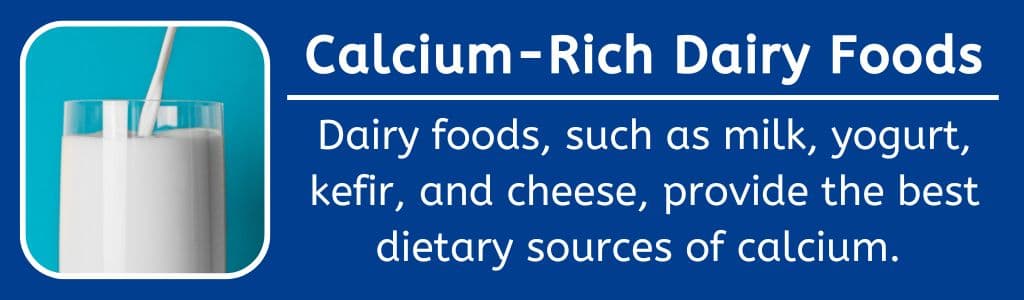
Dairy foods, such as milk, yogurt, kefir, and cheese, provide the best dietary sources of calcium. When working with teen athletes, I like to encourage them to aim for a minimum of 3-servings of calcium rich foods per day.
Aside from dairy foods, some plant-based foods also contain calcium, such as broccoli, spinach, kale, bok choy, calcium-set tofu, and fortified soy milk. If your teen athlete eats sardines or canned salmon with bones, these foods also provide a dietary source of calcium (1, 5).
Calcium-fortified foods, such as orange juice, bars, some cereals and protein powders, also provide a way to add protein to a teen athlete’s diet.
Calcium Content of Foods and Beverages
The chart below provides the calcium content of frequently consumed foods and beverages.
| Food / Beverage | Amount | Calcium Content (mg) |
| 1% milk | 1 cup | 310 mg |
| 1% Fairlife ultra-filtered milk | 1 cup | 401 mg |
| Soy milk | 1 cup | 246 mg |
| Kefir | 1 cup | 316 mg |
| Greek yogurt | 7-oz container | 230 mg |
| String cheese | 1 stick | 207 mg |
| Calcium-fortified orange juice | 1 cup | 349 mg |
| NutriGrain Bar | 1 bar | 130 mg |
| Spinach, boiled | ½ cup cooked | 123 mg |
| Broccoli, raw | 1 cup chopped | 43 mg |
| Core Power, 26 g protein | 14 fl oz (1 bottle) | 670 mg |
Calcium Absorption by the Body
Calcium is best absorbed by the body when consumed in smaller amounts (~500 mg). Thus, eating several servings of calcium-rich foods and beverages with meals and snacks throughout the day is recommended.
In addition, calcium from dairy products and fortified foods is better absorbed by the body than calcium from plant foods. Plants contains compounds, such as phytates and oxalates, that reduce the absorption of calcium by the body (1).
I still encourage athletes to eat vegetables that contain calcium. However, this should be in addition to a variety of other calcium-rich foods.
Pro Tip: Combining calcium intake with Vitamin D is often recommended. Vitamin D is necessary for the absorption of calcium in the gut (1). When discussing nutrition strategies to optimize bone health, these two nutrients go hand-in-hand.
Simple Ideas for Adding Calcium to a Teen Athlete’s Diet
Putting this all together, some simple ideas for adding calcium to a teen’s meals and snacks include:
- Drink milk with meals and snacks
- Use milk to prepare oatmeal, overnight oats, pudding, and soups
- Add a string cheese to a teen athlete’s school lunch
- Enjoy a Greek yogurt and fruit parfait as a healthy after school snack
- Add shredded cheese and plain Greek yogurt as a topping on baked potatoes
- Enjoy chocolate milk after a workout to support recovery nutrition needs
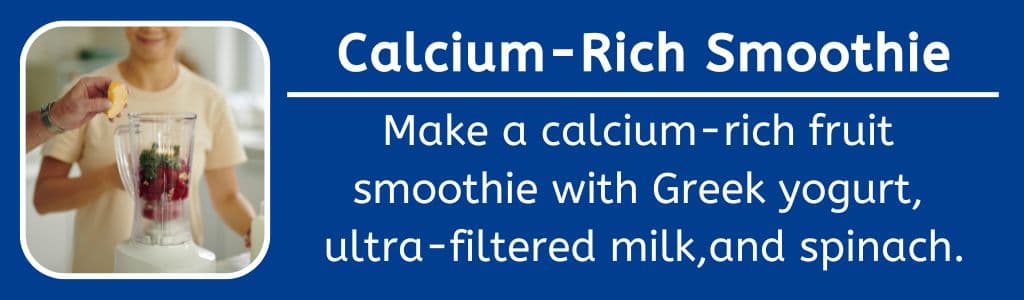
- Make a calcium-rich fruit smoothie with ultra-filtered milk, Greek yogurt, and spinach
- Make a tofu stir-fry with carrots, broccoli, and bok choy for a healthy weeknight dinner
Calcium Supplements for Teens
If you have concerns that your teen athlete is not consuming adequate calcium in the diet, a calcium supplement may be appropriate.
The main types of calcium supplements available at the store include calcium citrate and calcium carbonate. Calcium citrate is readily absorbed by the body and can be taken without food. Calcium carbonate should be taken with food to support maximal absorption (5).
As discussed, calcium (particularly supplements) is best absorbed in smaller doses (500 mg). Spacing calcium supplements apart during the day (i.e., breakfast and dinner) can help support its absorption by the body (5).
Similar to any supplement, I suggest visiting with the teen’s physician or a sports dietitian for guidance on meeting your teen’s calcium needs.
Pro Tip: If your teen has iron deficiency, it is important to note that calcium can interfere with iron absorption. Make sure to review my blog on iron deficiency in athletes for tips on spacing calcium consumption apart from iron to support optimal absorption of both nutrients.
Calcium for Teens: Meeting the Needs of Athletes
You now have an overview of the importance of calcium for teens, as well as tips for helping teen athletes add calcium to their meals and snacks.
For additional sports nutrition tips, make sure to check out my blog on protein for teen athletes.
Join the Nutrition By Mandy Email List & Get a Free Athlete’s Grocery List
Click HERE to join the Nutrition By Mandy e-mail list. When you join you will receive a free athlete’s grocery list to print and take with you to the store.
About the Author
Mandy Tyler is a Sports Dietitian Nutritionist in the San Antonio, TX area. She is a Registered and Licensed Dietitian, a Board-Certified Specialist in Sports Dietetics, a Licensed Athletic Trainer, and is a Certified Exercise Physiologist through the American College of Sports Medicine. Mandy has experience working with athletes at the high school, collegiate, and professional levels. She believes the key to reaching one’s full potential, both in everyday life and in sports performance, relies on a healthy nutritional foundation.
If you are looking to take your performance to the next level, make sure to check out my new Sports Nutrition Game Day Guide. This downloadable guide is written to help athletes develop an individualized plan to achieve peak performance on game day.