Last Updated on April 25, 2026 by Mandy Tyler, M.Ed., RD, CSSD, LD
Sports Nutrition 101: Foundations of Peak Performance
Want to level up your sports nutrition game plan? A quick Sports Nutrition 101 can help lay the foundation so you’re ready to train and perform at your best.
Below are 3 essential strategies to help athletes fuel for peak performance.
Sports Nutrition 101: Fuel Your Workouts
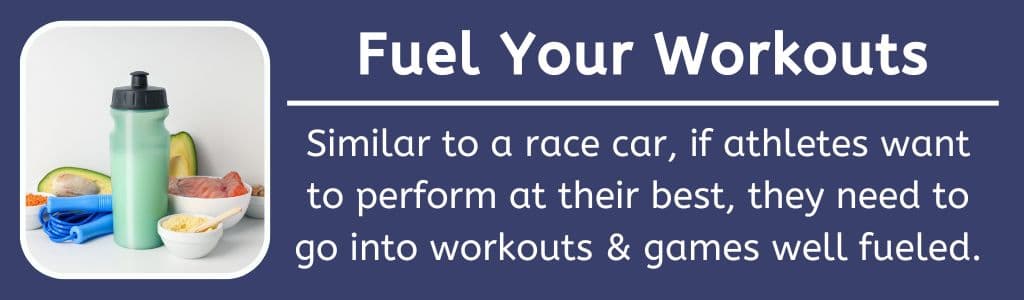
Similar to a race car, if athletes want to perform at their best, it is important that they go into workouts and competitions well fueled.
In general, the amount and type of food that an athlete should eat before exercise depends on how much time they have prior to the start of the activity.
When athletes have 3-4 hours before the start of the activity, they should plan on eating a meal that provides a good source of carbohydrates and a moderate amount of protein.
Carbohydrates provide athletes with the energy they need to perform at their best. Thus, carbohydrates should be at the foundation of an athlete’s pre-game/workout meal.
Meal Ideas for Before Activity
Easy meal ideas that athletes can enjoy before a workout or competition include:
- Pancakes with strawberries and scrambled eggs
- Fruit smoothie, bagel with nut butter
- Turkey sub sandwich, pretzels, apple slices
- Grilled chicken sandwich, Greek yogurt and fruit parfait
- Grilled salmon, rice, green beans, dinner rolls
- Pasta with marinara (tomato sauce), turkey meatballs, breadsticks
Snack Ideas for Before Activity
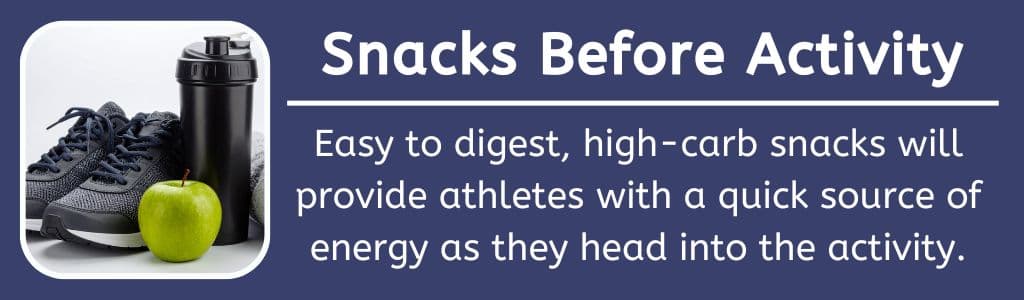
When athletes have less time before the activity, they should focus on fueling their workout with high-carb snacks. Eating easy to digest, carbohydrate-rich snacks will provide athletes with a quick source of energy as they head into the activity.
In the hour or two before a workout or game, athletes can enjoy the following quick snacks:
- Banana, grapes, orange slices, small piece of fruit
- Applesauce squeeze, dried fruit, fruit leather
- Bagel, fig bar, granola bars or bites
- Dry breakfast cereal, protein granola
- Pretzels, pita chips, graham crackers, animal crackers
- Oatmeal energy bites (recipe from Kiran Campbell, RDN)
Sports Nutrition 101 Pro Tip: Athletes should have a plan in place for fueling before morning practice. As a reminder, if athletes want to train at their best, it is important they have gas in their tanks!
Sports Nutrition 101: Recover After Exercise
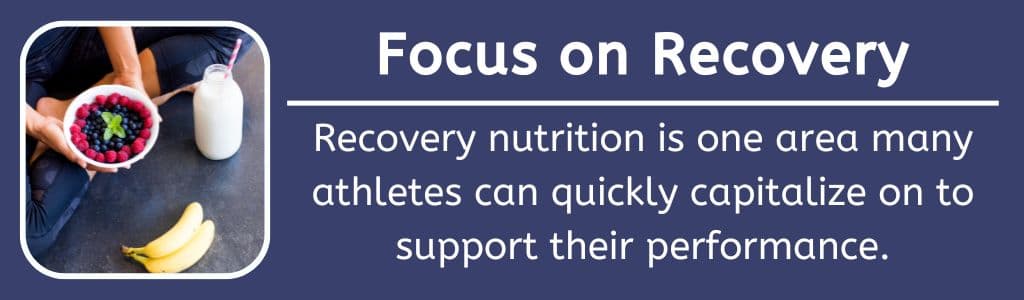
I find that many athletes do a great job with planning what to eat before activity, but tend to neglect planning for their recovery nutrition needs. Thus, recovery nutrition is one area many athletes can quickly capitalize on to support their performance.
Recovery nutrition is particularly important for athletes when they have limited time (< 24 hours) between workouts or games. This includes athletes who are doing two-a-day workouts, have back-to-back games, or are participating in tournament competitions.
Recovery Nutrition 101
There are three key areas that athletes should focus on to support their recovery nutrition needs.
- Rehydrate– Replace fluid and electrolytes lost in sweat during the activity
- Refuel– Consume carbohydrates to refill energy stores used during the activity
- Build and Repair– Consume protein to help build and repair muscles
Recovery Nutrition 101: Snack Ideas
Athletes should prioritize eating a snack after their workout session if it will be several hours until their next meal. I find this frequently to be the case for athletes who have morning practice and are heading straight to class.
Note: If an athlete is heading straight to the cafeteria (or home) to eat a meal following a workout, there is not a need to drink a protein shake or eat a snack on the way. Instead, athletes should plan to eat a healthy breakfast or well-balanced lunch/dinner that supports their recovery nutrition needs.
Snack Ideas for After a Workout or Competition
Easy snack ideas that athletes can enjoy following activity to support their recovery nutrition needs include:
- Low-fat chocolate milk, granola bars
- Greek yogurt, mixed berries, and protein granola
- Peanut butter and jelly sandwich, low-fat milk
- Turkey and cheese sandwich, 100% fruit juice
- Jerky, pretzels, sports drink
- Hard-boiled eggs, breakfast bars, 100% fruit juice
- String cheese, fig bars, low-fat milk
- Hummus, pita chips, soy milk
- Post-workout smoothie
Sports Nutrition 101 Pro Tip: Athletes should plan ahead and pack snacks in their backpacks or gym bags to enjoy following their workouts.
Recovery Nutrition 101: Meal Ideas
I encourage athletes to then follow-up their recovery nutrition snack with a well-balanced meal in the next couple of hours.
Ideas for meals to enjoy after a competition or workout include:
- Burrito bowl with rice, chicken or steak, black beans, corn salsa, guacamole, water
- Roast beef sub sandwich, pretzels, grapes, sports drink
- Grilled chicken, brown rice, steamed broccoli, dinner rolls, tart cherry juice
- Pasta with lean meat sauce, salad, breadsticks, low-fat milk
- Roasted salmon, sweet potatoes, green beans, mixed berries, 100% fruit juice
Sports Nutrition 101 Pro Tip: For additional meal recommendations, make sure to check out my blog with dinner ideas for athletes.
Sports Nutrition 101: Hydrate Right
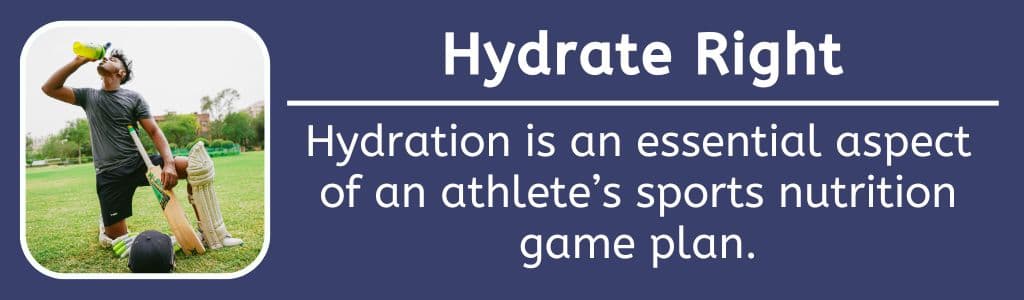
Hydration is an essential aspect of an athlete’s sports nutrition game plan.
Even mild dehydration can negatively impact an athlete’s cognitive function and aerobic sports performance. As dehydration becomes more severe, further decreases in performance are seen (1).
In addition, dehydration increases the risk of heat illness, especially when athletes are exercising in a hot and humid environment (1).
Despite the importance of hydration, the majority of athletes begin their workouts in a dehydrated state (2). Thus, I encourage athletes to make hydration a daily priority and to have a plan in place for hydrating before, during, and after activity.
Sports Nutrition 101 Pro Tip: Athletes should carry a refillable water bottle with them throughout the day as a reminder to hydrate.
Individualized Hydration Plan for Activity
The hydration needs of athletes vary greatly in regard to both the amount of fluid and electrolytes (namely sodium) lost in sweat.
Some athletes are “heavy sweaters,” losing a large amount of fluid from their body when they exercise. A study examining the sweat rate of NBA Summer League basketball players found that players lost a range of 1.0-4.6 L of fluid during a game (3). Losing 4.6 L of fluid is a lot of sweat!
In addition to differences in the amount of fluid lost, the amount of sodium lost in sweat also varies. Some athletes are “salty sweaters,” losing higher amounts of sodium in sweat than other individuals.
Thus, I encourage athletes to be mindful of their own sweat response to exercise. Some questions they may consider include:
- Are you a heavy sweater? Do you regularly sweat through your jersey or workout shirt when exercising?
- Are you a salty sweater? Do you see dried white rings of salt on your t-shirt or hat after exercising? When sweat gets in your mouth does it taste extra salty?
Sports Nutrition 101 Pro Tip: The Gatorade Sports Science Institute has a Fluid Loss Calculator available on their website that can help athletes calculate hourly sweat rate during exercise.
Hydration Tips for Before, During, and After Activity
Although hydration needs vary amongst athletes, there are some general hydration guidelines that athletes can follow.
Hydrating Before Activity
Approximately 4 hours prior to the event, it is recommended that athletes drink 5-7 mL of fluid per kg of body weight (1).
For a 175-pound athlete, this calculates to be ~13 – 18 fluid ounces. Consuming approximately 2 cups of fluid (16 fl oz) with the pre-event meal can help athletes meet this goal.
In the hour leading up to the activity, athletes should continue hydrating, aiming to drink ~8 oz (1 cup) of fluid during this time period.
Hydrating During Exercise
Hydrating during activity is important to help athletes replace sweat losses and minimize the amount of dehydration that occurs.
Although hydration needs vary greatly for athletes, a general rule is to aim to drink ~3-8 ounces of fluid every 15-20 minutes (0.4-0.8 L per hour) of activity (1, 4).
Drinking a big gulp of water or sports drink is equivalent to approximately 1 ounce of fluid. Based on this, I encourage athletes to aim for several big gulps from their water bottle every 15-20 minutes (or as competition allows).
Sports Nutrition 101 Pro Tip: Consuming a sports drink during activity can help athletes with replacing both fluid and electrolyte losses. In addition, the carbohydrates provide athletes with a source of quick energy for the playing field.
Rehydrating After Activity
Following activity, it is important for athletes to replace the fluid and electrolytes lost in sweat.
Rehydrating with fluids and electrolytes is particularly important for athletes when they are doing multiple workouts within the same day or repeated days of hard training.
Weighing before and after activity can help athletes determine how much fluid was lost during the event. For each pound of weight lost during the activity, the athlete should aim to drink 20-24 oz of fluid to fully rehydrate before the next exercise session (4).
When athletes do not replace the fluid lost during an exercise session, they will start the next workout or competition in a dehydrated state (1).
Cumulative dehydration over several days can increase an athlete’s risk of developing a heat illness and negatively impact sports performance (5).
Sports Nutrition 101 Pro Tip: I encourage athletes to be particularly mindful of their hydration needs when exercising outdoors in the heat and humidity. Make sure to check out my blog with summer hydration tips for athletes for additional hydration recommendations.
Sports Nutrition 101: Foundations of Peak Performance
You are now set with key sports nutrition strategies to help fuel peak performance.
If you are interested in individualized guidance or help with meal planning, consider meeting with a sports dietitian nutritionist. The sports dietitian can work with you on developing a sports nutrition plan that supports your specific health and performance needs.
For additional sports nutrition tips and resources, make sure to check out my blog that provides guidance on evaluating sports supplements for athletes.
Join the Nutrition By Mandy Email List & Get a Free Athlete’s Grocery List
Click HERE to join the Nutrition By Mandy e-mail list. When you join you will receive a free athlete’s grocery list to print and take with you to the store.
About the Author
Mandy Tyler is a Sports Dietitian Nutritionist in the San Antonio, TX area. She is a Registered and Licensed Dietitian, a Board-Certified Specialist in Sports Dietetics, a Licensed Athletic Trainer, and is a Certified Exercise Physiologist through the American College of Sports Medicine. Mandy has experience working with athletes at the high school, collegiate, and professional levels. She believes the key to reaching one’s full potential, both in everyday life and in sports performance, relies on a healthy nutritional foundation.
If you are looking to take your performance to the next level, make sure to check out my new Sports Nutrition Game Day Guide. This downloadable guide is written to help athletes develop an individualized plan to achieve peak performance on game day.