

Last Updated on April 10, 2026 by Mandy Tyler, M.Ed., RD, CSSD, LD
Vitamin D for Athletes: What You Need to Know
Vitamin D is an important nutrient for athletes. Unfortunately, it is common to find that many athletes are Vitamin D deficient.
Let’s explore the roles of Vitamin D in the body. Then we will look at ideas for helping athletes meet their daily needs of Vitamin D.
Importance of Vitamin D for Athletes
Vitamin D is a fat-soluble vitamin that plays many important roles in the body. It is necessary for the absorption of calcium in the body, which supports the development of strong bones.
Vitamin D is also important for immune health, muscle function, nerve signaling, and helping to reduce inflammation in the body (1).
Given the importance of Vitamin D, it is essential to ensure that the Vitamin D levels of athletes are adequate.
Can the Body Make Vitamin D?
The body can produce Vitamin D when the skin is exposed to UV rays from sunlight.
However, there are numerous factors that impact the skin’s ability to produce Vitamin D, such as (1, 2):
- Season of the year
- Time of day
- Geographic location (distance from the equator)
- Cloud coverage
- Use of sunblock
- Clothing, uniforms, equipment worn
- Melanin content of the skin

How Much Time in the Sun is Needed to Make Adequate Vitamin D?
To maintain adequate levels of Vitamin D without supplementation, the following is suggested (1, 3):
- Exposure of the face, arms, and legs (~30% of the body) to sunlight for ~15-30 minutes, six times per week, without the use of sunscreen, between the hours of 10 am – 3 pm.
Athletes that wear protective equipment or clothing, use sunscreen (important for skin health), practice indoors, or workout in the morning or evening may be at risk for Vitamin D insufficiency (2).
What Are the Vitamin D Needs of Athletes?
The Recommended Daily Allowance (RDA) for Vitamin D for individuals ages 1 – 70 years is 600 IU (15 mcg) per day. Individuals above the age of 70 years old have an increased Vitamin D requirement of 800 IU (20 mcg) per day (1).
These recommendations reflect the amount of Vitamin D needed to allow for normal calcium absorption in the body and maintain bone health (1).
Assessing the Vitamin D Status of Athletes
Serum Vitamin D levels (blood work) are used to assess the Vitamin D status of athletes. The chart below shares the National Academies categorization system for Vitamin D, which is commonly used for athletes (4).
| Vitamin D Status | Serum 25[OH]D Level |
| Severely Deficient | < 12.5 nmol/L |
| Deficient | 12.5 – < 30 nmol/L |
| Insufficient | 30 – 50 nmol/L |
| Sufficient | > 50 nmol/L |
Vitamin D Status of Athletes of Different Ethnicities
It is important to be aware that more research is needed to gain a better understanding of how Vitamin D levels may differ amongst athletes of different ethnicities.
For example, low serum Vitamin D status in black athletes does not appear to correlate with low bone mineral density. Thus, it has been questioned whether we are measuring the right Vitamin D marker in athletes of different ethnic backgrounds (4).
Stay tuned as we learn more in this area.
Adding Vitamin D to an Athlete’s Diet
Vitamin D is not found abundantly in food sources. There are only a few foods in which Vitamin D is found naturally, such as: fatty fish, fish liver oils, beef liver, cheese, and egg yolks. Mushrooms that have been treated with UV light also contain Vitamin D (1).
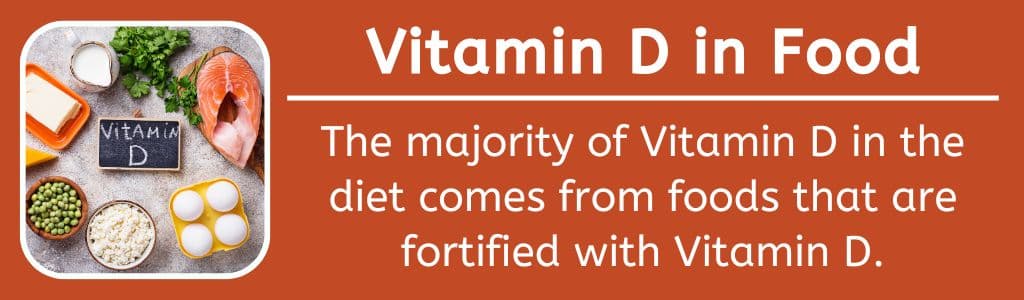
The majority of Vitamin D consumed in the diet comes from foods that are fortified with Vitamin D, such as milk, plant-based milks, cereals, tofu, yogurt, and orange juice (1).
The chart below provides the Vitamin D content of frequently consumed foods and beverages.
| Food / Beverage | Amount | Vitamin D Content (IU) |
| Salmon, sockeye | 3 oz | 479 IU |
| Core Power, 26 g protein | 14 fl oz (1 bottle) | 200 IU |
| Total Cereal | 1 cup | 160 IU |
| 1% milk, fortified with D | 1 cup | 104 IU |
| 1% Fairlife ultra-filtered milk | 1 cup | 101 IU |
| Almond milk, unsweetened | 1 cup | 101 IU |
| Vitamin D-fortified orange juice | 1 cup | 100 IU |
| NutriGrain Bar | 1 bar | 80 IU |
| Beef liver | 4 oz | 55 IU |
| Egg yolk | 1 large | 37 IU |
| Cheddar cheese, sharp | 1 oz | 12 IU |
| Mushrooms, portabella | 1 cup, diced | 9 IU |
Simple Ideas for Adding Vitamin D to an Athlete’s Diet
Putting this all together, some simple ideas for adding Vitamin D to an athlete’s meal plan include:
- Drink milk with meals and snacks
- Purchase orange juice fortified with Vitamin D
- Add a cheese stick to an athlete’s school lunch
- Use ultra-filtered milk to prepare oatmeal, overnight oats, pudding, and soups
- Enjoy chocolate milk after a workout to support recovery nutrition needs
- Make a fruit smoothie with milk and yogurt as a healthy after school snack
- Make an Asian wrap with tofu, vegetables, and mushrooms for a quick lunch-on-the go.
- Prepare salmon, roasted vegetables, and brown rice for a healthy dinner
Vitamin D Supplements for Athletes
If you are concerned that an athlete’s Vitamin D levels may be inadequate, my first recommendation is to have bloodwork done to test the athlete’s levels.
When athletes are Vitamin D deficient it is common to recommend a supplement. Dietary strategies alone (particularly since Vitamin D is found in few food sources) are typically not adequate to correct a deficiency (2).
The main types of Vitamin D supplements available at the store include Vitamin D2 and Vitamin D3. Vitamin D3 is the more bioavailable form which is absorbed better by the body. Thus, Vitamin D3 is the recommended form for athletes to use as a supplement (3, 5).
How Much Vitamin D Should Athletes Take?
When working with athletes, I make recommendations for Vitamin D supplementation based upon their lab results. Generally, a daily supplement in the range of 2,000 – 4,000 IU Vitamin D3 is what is recommended for athletes (3).
A prior common practice was to provide athletes with a once-a-week mega-dose of Vitamin D (i.e., 70,000 IU taken weekly). However, research has shown that mega-dose supplementation may have unintended consequences and lead to an increased breakdown of Vitamin D in the body (3, 4). Thus, moderate daily doses of Vitamin D are currently recommended over weekly mega-dose supplementation.
Seek Guidance from a Sports Dietitian on Vitamin D Supplementation
Similar to any supplement, I suggest visiting with a physician or a sports dietitian for guidance on meeting an athlete’s Vitamin D needs.
The sports dietitian can provide guidance on the appropriate Vitamin D dosage to supplement with based on lab levels.

Are There Concerns with Taking Too Much Vitamin D?
Consuming excess Vitamin D from supplements can be a concern. Vitamin D levels > 180 nmol/L are potentially toxic, which can occur when supplementing with large amounts of Vitamin D (4).
Vitamin D increases calcium absorption in the body; thus, high levels of Vitamin D can lead to elevated calcium levels (hypercalcemia).
Elevated calcium can cause symptoms such as nausea, vomiting, muscle weakness, dehydration, and kidney stones. In extreme situations, Vitamin D toxicity can result in kidney failure, cardiac arrythmias, and death (1).
Vitamin D for Athletes: What You Need to Know
You now have an overview of the importance of Vitamin D for athletes.
For additional sports nutrition tips and resources, make sure to check out my blog on preventing iron deficiency in athletes.
Join the Nutrition By Mandy Email List & Get a Free Athlete’s Grocery List
Click HERE to join the Nutrition By Mandy e-mail list. When you join you will receive a free athlete’s grocery list to print and take with you to the store.
About the Author
Mandy Tyler is a Sports Dietitian Nutritionist in the San Antonio, TX area. She is a Registered and Licensed Dietitian, a Board-Certified Specialist in Sports Dietetics, a Licensed Athletic Trainer, and is a Certified Exercise Physiologist through the American College of Sports Medicine. Mandy has experience working with athletes at the high school, collegiate, and professional levels. She believes the key to reaching one’s full potential, both in everyday life and in sports performance, relies on a healthy nutritional foundation.

If you are looking to take your performance to the next level, make sure to check out my new Sports Nutrition Game Day Guide. This downloadable guide is written to help athletes develop an individualized plan to achieve peak performance on game day.